The Science Behind the Five-Body Healing Method
A Clinical Approach to Whole-System Recovery
In modern healthcare, treatment often focuses on stabilising symptoms. Pain may reduce, inflammation may settle, or a condition may be medically managed. Yet many individuals remain in a state of ongoing imbalance, where the body has not fully returned to stability.
At Khi Tam, the focus extends beyond symptom management. The Five-Body Healing Method is a structured approach grounded in biomechanics, nervous system regulation and whole-body physiology. It is designed to support the body’s natural ability to restore balance, regulate stress and recover over time.
Rather than viewing the body as separate systems, this method recognises how physical, neurological, emotional and physiological processes are deeply interconnected.
Understanding the Five Bodies Through a Clinical Lens
Each of the Five Bodies reflects a different aspect of how the body functions, adapts and heals. Together, they provide a framework for understanding both the source of imbalance and the pathway to recovery.
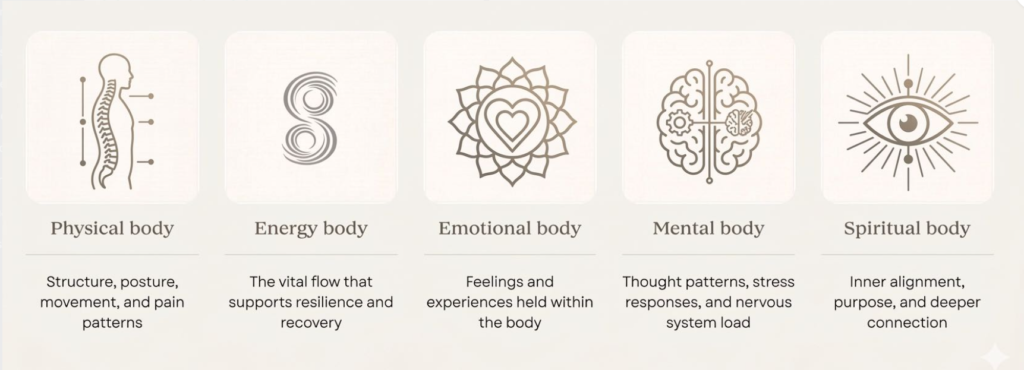
The Physical Body
• Structural Alignment and Mechanical Load
The physical body forms the foundation of health. Alignment of the spine and joints directly influences how force is distributed throughout the body.
When this alignment is compromised, it can create ongoing mechanical stress. This places strain on muscles, joints and the nervous system, often contributing to chronic pain and reduced mobility.
• Clinical perspective
Assessment focuses on posture, movement patterns and structural balance. By improving alignment and reducing unnecessary load, pressure on the nervous system can be eased.
• Outcome
The Energy Body
• Breathing, Oxygenation and Metabolic Function
In the Khi Tam framework, the energy body relates to how the body produces and uses energy at a physiological level.
Breathing patterns play a central role. Shallow or restricted breathing can limit oxygen exchange and contribute to fatigue, tension and reduced resilience.
• Clinical perspective
Work focuses on restoring natural breathing patterns and improving diaphragmatic function, supporting oxygen delivery and overall physiological balance.
• Outcome
The Emotional Body
• Stress Response and Physiological Regulation
Emotional experiences are closely linked to the body’s stress response. Prolonged stress can lead to increased muscle tension, altered breathing and heightened nervous system activity.
Over time, this may contribute to persistent discomfort and reduced ability to recover.
• Clinical perspective
The focus is on helping the body move out of a constant stress response and into a more regulated state, supporting both physical and emotional balance.
• Outcome
The Mental Body
• Nervous System and Neuroplasticity
The mental body reflects how the brain and nervous system interpret and respond to the body.
In chronic pain or long-term stress, the brain’s perception of the body can become less accurate. This can affect movement, coordination and pain sensitivity.
• Clinical perspective
Through guided movement and awareness-based techniques, the nervous system is supported in forming clearer, more accurate patterns.
• Outcome
The Spiritual Body
• Integration and Whole-System Balance
The spiritual body refers to the overall sense of integration within the system. When the body’s different systems are working in harmony, it creates a state of internal balance and stability.
This is not a separate system, but the result of alignment across all others.
• Clinical perspective
By addressing physical, neurological and emotional factors together, the body is supported in returning to a more balanced and regulated state.
• Outcome
- Beyond Treatment
A Preventative and Educational Approach
At Khi Tam, treatment is not only about resolving current symptoms. It is also about helping individuals understand how their body functions, so they can maintain health over time. Many conditions develop gradually through small, repeated patterns of strain or imbalance. By recognising these early, it becomes possible to prevent more significant issues from developing.
- Early Detection Through Assessment
Detailed assessment allows subtle imbalances to be identified before they progress. This may include changes in posture, movement or breathing patterns that, over time, can contribute to discomfort or dysfunction.
- Focus
Identifying early signs of strain and supporting the body before symptoms become more established.
- Developing Body Awareness
Awareness of the body plays a key role in long-term health. When individuals are able to recognise tension, imbalance or changes in movement, they are better able to respond early.
- Focus
Improving awareness of posture, breathing and movement to support self-correction in everyday life.
- Supporting Physiological Balance
Daily habits, including breathing and movement, influence how the body regulates itself.
By learning simple, structured techniques, individuals can support their own recovery and maintain internal balance.
- Focus
Helping the body regulate more effectively through consistent, manageable practices.
Education as Long-Term Support
A key aim of the Khi Tam approach is to provide individuals with the understanding and tools needed to support their own health. This may include:
Practical strategies for joint protection and daily movement
Techniques to regulate the nervous system and manage stress
Simple routines that support long-term balance and wellbeing
Over time, this approach encourages independence and a deeper understanding of how the body functions.
A Complementary Approach to Care
Begin with a Whole-System Assessment
Your first consultation includes a detailed assessment across the Five Bodies, helping to identify where imbalance may be present and how best to support your recovery.